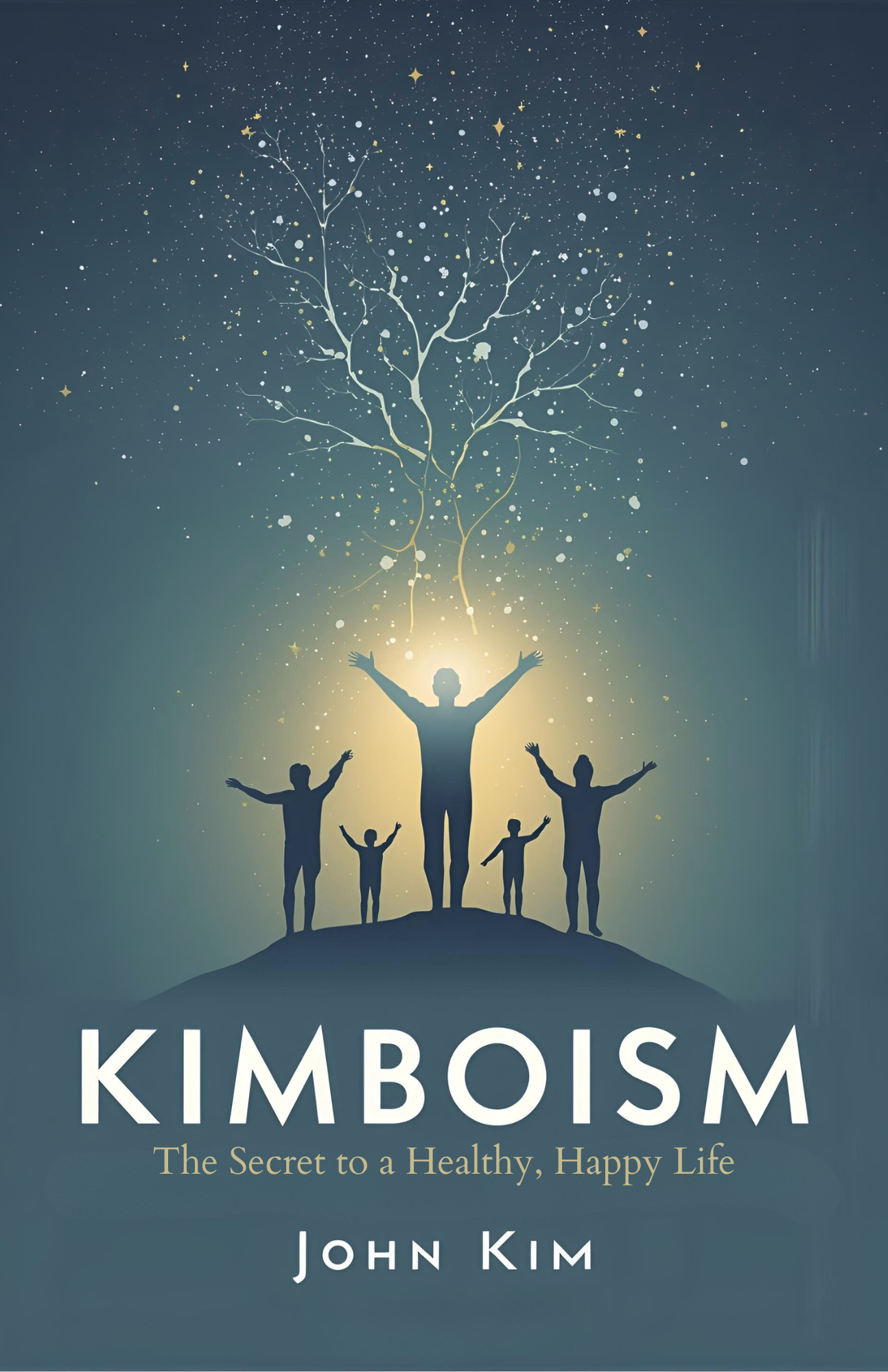
KIMBOISM
FROM THE PREFACE
Why “Kimboism”?
Before we begin, a quick word about the name of this book.
I called it Kimboism for one simple reason: it’s named after me. Not the formal, grown-up version of me, but the nickname I was given when I was seven years old. It followed me into adulthood and even became my stage name back when I played music professionally. Long before it meant anything philosophical, Kimbo was just… me. A little messy, a little creative, a little unfinished.
That’s important because I’m presenting you with a framework that emerged from my own life—my failures, my reflections, and my search for connection. Naming it after myself is a reminder of that. This is a system that works for me, not a new universal doctrine or a system to replace all others. If parts of it resonate, take them. If not, that’s totally cool too.
Also, in recent years Kimbo is the name I’ve given to my shadow—the parts of myself that I used to reject or hide. We’ll explore the shadow more deeply later, but for now, think of it as the pieces of you that you judge as “not good enough.” The impulse to ignore or suppress those parts keeps you divided. Learning to connect with them, to listen instead of fight, is part of what makes you whole—and ultimately, healthier and happier.
Writing is, in many ways, an act of connecting with my own shadow. This book isn’t flawless. It isn’t the final word. It’s a work in progress, just like the human being behind it. And yet, like any honest engagement with your shadow, I believe there’s value here—not because it’s perfect, but because it’s real.
Think of Kimboism as a lens, not a law. It’s a perspective that has worked for me, shaped by my experiences, my background, my faith, my missteps, and my search for connection. My hope isn’t that you adopt it wholesale, but that it sparks something—an insight, a habit, a shift—that supports your own journey.
STAY UPDATED
Be part of the journey as the book comes to life.
Thanks for joining!
Glad to have you here.